5 Signs Your Yard Needs Better Drainage in Cumming
If you live in Cumming, you know how quickly summer storms can turn a tidy lawn into a soggy mess. North Georgia's clay-heavy soils drain slowly, and water can pool near your home if it has nowhere to go. When that happens, you need reliable drainage solutions in Cumming to protect your foundation, landscaping, and outdoor living spaces.
Why Yard Drainage Matters In Cumming
Poor drainage is more than an eyesore. It weakens soil around your foundation, invites pests, and can damage lawns and hardscapes. In neighborhoods from Windermere and Vickery to the Sawnee Mountain area, sloped lots and clay soils make runoff predictable, but not always easy to control. The right plan moves water away from your home before it causes trouble.
Sign 1: Persistent Puddles After Normal Rain
After a typical Georgia rain, your yard should drain within a day. If puddles linger for days, your soil, grading, or both are holding water. Low spots and compacted clay act like a bowl. Over time, these wet zones smother grass, create muddy paths, and push water toward patios or the house.
Tip: If you can see your reflection in standing water a full day after average rainfall, that area likely needs professional attention.
Sign 2: Soggy, Spongy Turf That Never Dries
Walk across your lawn and feel a sponge underfoot? Constantly saturated turf starves roots of oxygen and encourages fungus. You may notice yellowing patches, thin grass, or mushrooms after storms. Soggy ground also makes mowing tough and can leave ruts that collect even more water the next time it rains.
Sign 3: Water Against The Foundation Or In Crawl Spaces
Water should never sit against your foundation. If you see damp lines on the stem wall, musty smells in the crawl space, or efflorescence on block walls, runoff is likely finding the wrong path. Over months and years, that moisture can stress materials, invite pests, and add humidity indoors.
- Look for mulch washed away from the base of the house after storms.
- Check for damp corners in basements or crawl spaces a day or two after rain.
- Notice any soft soil where downspouts meet the ground.
Local insight: Short, intense storms are common in Forsyth County, and clay soils shed water fast. A well-planned yard drainage system spreads and directs that surge before it can pool near your home.
Sign 4: Erosion, Washed-Out Mulch, And Exposed Roots
Channels in the soil, bare patches on slopes, and mulch piled at the bottom of beds tell a clear story. Fast-moving runoff is carving its own path. That flow can strip nutrients, expose roots, and leave your lawn uneven. If you find yourself replacing mulch after every storm, drainage is likely the root cause.
Warning: Ignoring erosion often leads to bigger fixes later, like rebuilding beds or resetting pavers after they settle.
Sign 5: Downspouts That Dump Water In The Wrong Spot
Downspouts should send roof water away from the house, not into garden beds or onto walkways. If water pools where downspouts end, you may see soggy corners, stained siding, or icy patches in winter. Redirecting those lines to a safer discharge point or a subsurface system keeps heavy roof runoff from overwhelming your yard.
What Professional Drainage Solutions Look Like
Every property in Cumming is different, so the best fix is designed for your grades, soil, and structures. A licensed landscaping company like Landscape Tailors evaluates how water moves across your lot and then installs the right mix of components to carry it away safely. Common systems include:
- French drains that collect subsurface water and move it to a safe outlet
- Catch basins and channel drains that intercept surface water before it spreads
- Downspout extensions or buried drain lines that discharge away from the foundation
- Regrading and swales that guide sheet flow across the lawn without erosion
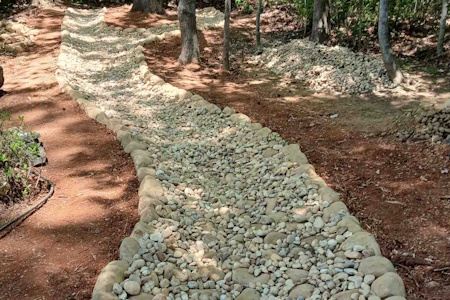
- Decorative dry creek beds that slow water while adding curb appeal
Permitting and placement can vary by neighborhood and site details, so design and installation are handled to meet local expectations. The goal is simple: move water efficiently while protecting structures, plants, and outdoor spaces.
Our Yard Drainage Process For Cumming Homes
At Landscape Tailors, we start with a full site walk. We look at roof lines, slope, soil type, plant beds, and hardscapes. We note where water enters and where it should go. Then we plan an integrated system that fits your property and blends with your landscape.
Here is how a typical project flows:
- Assessment: measure grades, locate problem areas, and note discharge options.
- Design: choose components sized for local rainfall and your roof area.
- Integration: route water around patios, play areas, and plant beds.
- Installation: place drains and lines at proper depths and slopes.
- Finish work: restore sod and mulch so everything looks clean and intentional.
We match materials to North Georgia's clay soils and the slope patterns common around Lake Lanier and Sawnee Mountain. That means sturdy pipe, clean stone, filter fabrics where needed, and outlets that won't clog easily. Done right, the system becomes part of your landscape and quietly does its job during every storm.
Want to understand what a full-service plan covers? Review our approach on yard drainage help and see how a simple design can protect the places you love outside.
How To Tell If You Need A Full Drainage Plan Or A Targeted Fix
Some homes only need downspout redirection to move roof water farther from the foundation. Others require a combination of grading, basins, and subsurface drains. A professional evaluation weighs the size of your roof, the slope of each side yard, soil infiltration, and your preferred landscape style.
Good rule of thumb: If water reaches the foundation, enters a crawl space, or repeatedly kills turf in the same area, a full plan is the safer long-term choice.
Results You Can See After Proper Drainage
Once water is managed, the yard feels different. Low spots stop squishing underfoot. Beds hold mulch instead of sending it down the driveway. Patios stay cleaner, and the foundation stays dry. Your lawn care routine gets easier too, because healthy roots don't have to fight constant saturation.
Homeowners across Cumming often report:
- Fewer muddy areas and better turf density
- Gardens that thrive instead of drown
- Walkways and driveways that stay stable and cleaner after storms
- Peace of mind when heavy rain moves in
Remember: The best drainage systems are almost invisible. You notice them most when it rains, and problems do not return.
When To Act Before The Next Storm
Think about your yard right after a recent storm. If you saw water sitting for days, mulch piled against the curb, or damp foundation walls, the next round of rain will likely repeat it. Fixing the flow now helps you avoid replanting beds and cleaning up after every storm.
Talking with a local pro keeps the process simple. One visit from Landscape Tailors can confirm whether you need a targeted fix or a complete plan. You will get clear next steps and a timeline that works with your schedule.
Get Expert Drainage Help In Cumming
If these signs sound familiar, it is time for a professional assessment. Call Landscape Tailors at 470-861-5670 to schedule your on-site evaluation. You will get a practical plan to move water away from your home and keep your outdoor spaces safe and enjoyable all year.
Start protecting your property today by exploring our approach to drainage solutions as a landscaping company in Cumming. We are ready to help you solve water problems and enjoy your yard again.
Call Us
Connect With Us
Leave a Review

Let's Build a Better Outdoor Space
Contact Our Landscaping Company Today!